Building To Last
Your base is only as strong as the Cash and building supplies you’ve put into it. Tiered tool cupboards gate your building materials, furnace upgrades gate your smelting speed, and an entire category of gear is uncraftable — you have to earn or raid it.
This makes bases a direct measure of a team’s economic output. A Tier 5 fortified compound tells every raider on the server that the people inside have been grinding. The flip side: a Tier 0 base is cheap to crack and probably worth hitting. Progression here isn’t cosmetic — it changes what kills you and what doesn’t.
Every Cash you farm, every vendor sale, every bank heist payout feeds directly back into your base. Skipping the upgrade track means you’re capped at weaker materials — and weaker materials fold faster under explosives. See Earning Cash for the fastest ways to fund your upgrades.
What You Can & Can't Craft
Original changes one of Rust's core rules: you can't craft your way to the top loadout. Recovery gear, low-tier weapons and the basics you need to build and defend a base stay craftable — but high-tier guns, raid explosives, military ammo and premium gear are blocked at the workbench. You loot them, buy them, redeem them from a schematic, or trade for them instead.
This is deliberate, not hardcore for its own sake. It keeps scavenging, the vendors, events and the marketplace meaningful — the good stuff has to come from somewhere real. Every blocked item always has at least one clear source, and the game shows a “where to get it” hint when you try to craft something that's locked.
| Still craftable | Not craftable — find, buy or schematic it |
|---|---|
| Bows, crossbows, spears, Eoka, Nailgun, Revolver, Semi Pistol, Python, Waterpipe & Double shotgun | AK, LR-300, M39, bolt-action, L96, SKS, M249, Minigun, the SMGs and the pump shotgun |
| Stone tools, hatchet, pickaxe, salvaged axe / icepick, knives | Chainsaw and Jackhammer (the farm-shortcut tools) |
| Arrows, handmade shells, normal pistol / rifle / shotgun ammo, gunpowder, beancan grenades, and HV rockets | Explosives, C4, satchels, basic rockets, MLRS, 40mm, F1 / molotov / flashbang / smoke, and explosive, HV or incendiary rifle ammo |
| Burlap, hide, wood & bone clothing, coffee-can helmet, roadsign armour | Metal facemask, metal chestplate, heavy & ballistic armour, hazmat suits |
| Boxes, cupboards, locks, campfires, furnaces, workbenches, wood / sheet doors, ladders, basic electrical & industrial, and Industrial Crafters | Armoured doors, all components, weapon attachments (silencer, 8× scope, holo, extended mags), night-vision, and drones |
Blueprint Fragments Are Now Schematic Pieces
The blue and green blueprint fragments you find no longer feed the workbench. Pick one up and it converts straight into a random schematic piece — the basic fragment gives a Random Common piece and the advanced fragment a Random Rare piece — dropped into your never-wiping schematic vault. Workbench 2 and 3 no longer ask for physical fragments to research.
Beds vs. Sleeping Bags
Respawn anchors split in two. A Sleeping Bag is still craftable, but it's now one-use — respawn on it once and it's gone. A Bed is a reusable respawn point, but you can't craft it — find one in loot or buy the limited stock from the Construction Store. Set your permanent spawn on a bed and keep cheap sleeping bags as emergency fallbacks.
Tiered Tool Cupboards
The tool cupboard (TC) controls the building tier for everything in its radius. Each upgrade costs Cash plus a set of building supplies and advances it one tier at a time. You start on wood, unlock stone, then sheet metal, and finally armoured (HQM).
The building supplies are scavenged custom items — a Nail Bundle gets you off wood, Cement Mix reaches the durable stone tier, Reinforcement Plates unlock metal, and an HQM Reinforcement Kit unlocks armoured. Click any for full details:
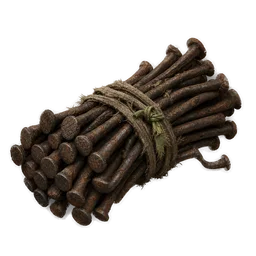 Nail BundleBasic tiers
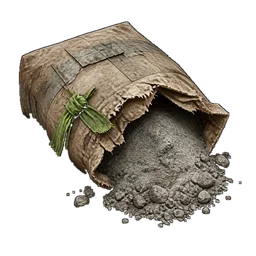 Cement MixDurable / stone
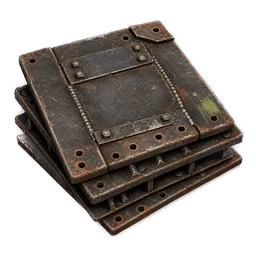 Reinforcement PlateMetal tier
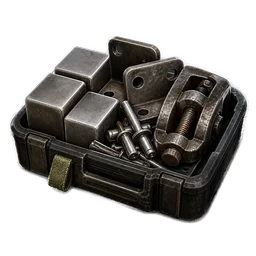 HQM KitArmoured tier
 Structural ToolkitRare shortcut
They drop from loot barrels, tool and construction crates, airdrops and construction-themed ground loot — or buy them from the Construction vendor as a fallback. See Earning Cash for scavenging routes.
| Tier | Cost to reach | Max building grade | Planters | Auto-turrets | Large furnace / refinery |
|---|---|---|---|---|---|
| Tier 0 (start) | Free | Wood | None | None | Locked |
| Tier 1 | $1,000 + 1× Nail Bundle | Stone | 8 (16 small) | 3 | Locked |
| Tier 2 | $2,000 + 2× Cement Mix | Stone | 16 (32 small) | 5 | Locked |
| Tier 3 | $3,500 + 2× Reinforcement Plate | Stone | 24 (48 small) | Unlimited | Unlocked |
| Tier 4 | $5,500 + 3× Plates + 2× Nail Bundles | Sheet Metal | 32 (64 small) | Unlimited | Unlocked |
| Tier 5 | $8,000 + 2× HQM Reinforcement Kits | Armoured (HQM) | Unlimited | Unlimited | Unlocked |
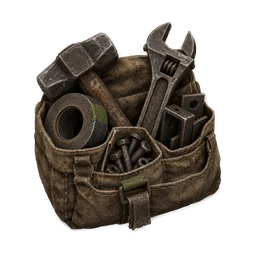
There is also a rare shortcut: the Structural Toolkit, redeemed from an Ultra Rare schematic. Use it on a tool cupboard and it instantly maxes that cupboard to the top tier — no cash or supplies needed. (It replaced the old “max every TC at once” reward, so it now upgrades the one TC you use it on.) A great pull for an under-funded main base.
Furnace Upgrades
Smelting is a constant background process on any active base, and Original lets you upgrade your furnaces with Cash so they work harder for you. Deposit Cash into a furnace to level up two separate tracks — smelting speed and fuel efficiency — so you pull more metal, sulfur and charcoal per hour and burn less wood doing it.
| Upgrade track | What it does | Level costs |
|---|---|---|
| Smelting speed | Smelts ore faster | $750 · $1,500 · $2,000 |
| Fuel efficiency | Each log lasts longer per smelt | $750 · $1,500 · $2,000 |
Both the standard Furnace and the Large Furnace use this system. A Skills perk halves the upgrade cost, so a dedicated farmer can max a furnace for far less.
Furnace upgrades are particularly valuable once your TC is at mid-to-high tier and your team is running regular raids — you need the sulfur and metal output to keep the explosives supply chain healthy.
The Raid Economy
Raiding on Original isn’t just a PvP statement — it’s an economic activity. Breaking into a base costs real resources (explosives take Cash or grinding to produce), carries risk (the defenders will fight back), and pays out in loot that funds your next upgrade cycle. Everything in this loop is tied back to Cash.
What It Costs To Raid
Explosives are the core raiding consumable. Most of them cannot be crafted through vanilla Rust blueprints — they are either bought through the Illegal Dealer for Cash, found in high-tier loot, or earned through events. This is intentional: the server wants raids to be a deliberate investment, not a zero-cost harassment tool.
Uncraftable Gear Cuts Both Ways
Explosives and most high-tier gear can't be crafted — and that scarcity works in both directions. An armored door on your base (which you buy from the Construction Store or loot) is also an armored door a raider must spend real explosives to breach. Because both attack and defence are earned, not printed, every raid is a genuine economic decision. See What You Can & Can't Craft for the full picture.
Gold Bars & The Heist Payoff
The biggest Cash payoffs in raiding territory come from the bank heists in Lazaria Town and Scraptown. Crack the vault, wait out the timer, and walk out with gold bars. Gold sells dynamically at outpost vendors — its price fluctuates with server supply, so timing a big heist payout matters. See Earning Cash for the gold selling chain.
After A Raid
If your base gets hit, the goal is recovery speed. Banked Cash is untouchable — raiders can only take what’s inside your base. Prioritise getting back to a safe TC and re-upgrading from your bank balance. The tools and gear you lost can be replaced through vendors, schematics, and events faster than your TC tiers — so protect the bank balance first.